In which a group of graying eternal amateurs discuss their passions, interests and obsessions, among them: movies, art, politics, evolutionary biology, taxes, writing, computers, these kids these days, and lousy educations.

E-Mail Donald
Demographer, recovering sociologist, and arts buff

E-Mail Fenster
College administrator and arts buff

E-Mail Francis
Architectural historian and arts buff

E-Mail Friedrich
Entrepreneur and arts buff
E-Mail Michael
Media flunky and arts buff


We assume it's OK to quote emailers by name.


Try Advanced Search


  1. Conspiracy Theory Analyzed
  2. Traditional Holiday Tradition
  3. More on Cruisers and Battlecruisers
  4. Blogging Note
  5. Over-Theorized Design
  6. The Role of the Art Museum is ...?
  7. Night Club Echo
  8. Boilerplate Adventures
  9. New Planes, Alternative Lives
  10. Cruisin' Large


CultureBlogs
• Sasha Castel
• AC Douglas
• Out of Lascaux
• The Ambler
• PhilosoBlog
• Modern Art Notes
• Cranky Professor
• Mike Snider on Poetry
• Silliman on Poetry
• Felix Salmon
• Gregdotorg
• BookSlut
• Polly Frost
• Polly and Ray's Forum
• Cronaca
• Plep
• Stumbling Tongue
• Brian's Culture Blog
• Banana Oil
• Scourge of Modernism
• Visible Darkness
• Seablogger
• Thomas Hobbs
• Blog Lodge
• Leibman Theory
• Goliard Dream
•
Third Level Digression
• Here Inside
• My Stupid Dog
• W.J. Duquette


Politics, Education, and Economics Blogs
• Andrew Sullivan
• The Corner at National Review
• Steve Sailer
• Samizdata
• Junius
• Joanne Jacobs
• CalPundit
• Natalie Solent
• A Libertarian Parent in the Countryside
• Rational Parenting
• Public Interest.co.uk
• Colby Cosh
• View from the Right
• Pejman Pundit
• Spleenville
• God of the Machine
• One Good Turn
• CinderellaBloggerfella
• Liberty Log
• Daily Pundit
• InstaPundit
• MindFloss
• Catallaxy Files
• Greatest Jeneration
• Glenn Frazier
• Jane Galt
• Jim Miller
• Limbic Nutrition
• Innocents Abroad
• Chicago Boyz
• James Lileks
• Cybrarian at Large
• Hello Bloggy!
• Setting the World to Rights
• Travelling Shoes


Miscellaneous
• Redwood Dragon
• IMAO
• The Invisible Hand
• ScrappleFace
• Daze Reader
• Lynn Sislo
• The Fat Guy
• Jon Walz

Links


Our Last 50 Referrers


« The Role of the Art Museum is ...? | Main | Blogging Note »

December 19, 2009

Over-Theorized Design

Donald Pittenger writes:

Dear Blowhards --

One of the more interesting studies of automotive styling is this 1988 book by C. Edson Armi.

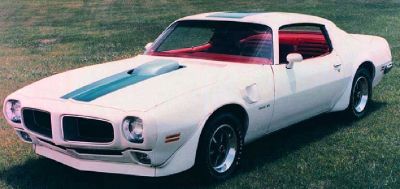
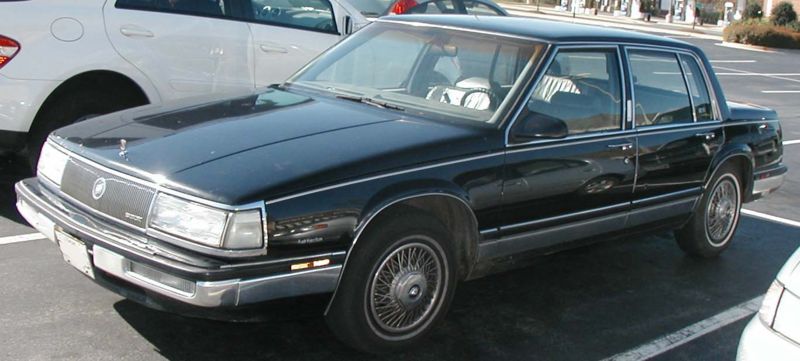
One chapter dealt with an interview with a stylist whose name was not familiar to me -- Bill Porter of General Motors. Apparently Poster is respected in his industry. He was responsible for the early 1970s Pontiac Firebird and the 1985 Buick Electra and was involved in other designs during his career. A fairly recent article dealing in part with Porter is here.

Bill%20Porter%20rendering.jpg
Unfinished rendering by Bill Porter

Below is material from the book.

In his search for a unique direction derived from an American tradition, Porter developed [General Motors styling Vice President Harley] Earl's orthographic and highlight system to create a new system of "power bulges" based on conic sections. He was searching for "fullness that is muscular" .... Porter sought to expand Harley Earl's curvilinear vocabulary in complicated new directions. [This for the Firebird, in contrast to the prevailing Bill Mitchell hard-edge styling formula for GM cars.] [p. 95]

Porter created his own dynamic movement by implying a single monocoque shell but by varying the conic sections infinitely. This play-off he describes as "unity-yet-difference" between the upper and lower body sections. On the one hand, "the curvature of the very leading edge of the roof just above the windshield, if continued forward, would not flow down to become the windshield surface but would arc out over it, forming an imaginary bubble that would reconnect with the cowl surface." On the other hand, the "bubble" suggests independent variation within itself: "The curved cone" of the roof " gets wider and wider as it goes back, until it curves down and passes alongside the rear window, where it flattens way out until it curves down to fuse with the lower. Think of it sort of as a thin shell that, while structural, is like a cape unfurling. It is as if the cape were held by the front edge and unfurls to the rear, imparting a subliminal sense of something having been affected by motion." Porter also speaks about stretching the monocoque into the lower by means of barely perceptively changing curved sections that he extended through the front and rear fenders. He intended for the radii changes to be simultaneously subtle and repetition -- to be as much felt as understood ... [pp. 95-6]

Car designers are almost always car crazy, in a positive sense, but very few who reach the top have any awareness of the other arts. Not only is Porter aware of the history of modern design and of the place of cars in it, but he also talks about his designs with the vocabulary usually reserved for painting, sculpture, and architecture. Porter earned a degree in painting from the University of Louisville.... [p. 255]

He searches for added visual complexity, having discovered during the sixties "a richer vocabulary' based on subtly changing conic sections. Especially important to him are the aesthetics of visual transition, and he researches "evolving" form, correspondence, analogy, discontinuity, and particularly curve life (which he calls "spring") within changing shapes. He also looks for suggestive metaphors and harmonies in those visual intricacies. Porter is a man whose vocabulary is dominated by two words: For him, the conscious search for the "exquisite" should produce the hidden satisfaction of the "subliminal." Ask him to explain what he is driving at with a form, and he responds with a metaphor expressing the unconscious "imaging" he hopes to achieve... [p.256]

[Porter interview, comments on the "subtle" 1985 Buick Electra:]

This car has some intentional subtleties in it, too, that you might be interested in hearing about. First of all, the Electra has a lot of plan-view curvature in the body side -- a little of the boatlike quality which [1930s, 40s Ford designer Bob] Gregorie probably would have enjoyed. Then, the lower body section is "loaded" through the doors: About three or four inches above the side rub strip, there is a very subtle bulge or crown in the section. The kind of bulge you see right under the windows on the Firebird is down in the midsection of the door on the Electra. The side glass and upper door surfaces lie more or less on one plane, sloping down and outward until it reaches its widest point at this bulge, so that the car has a slightly pear-shaped quality.

Down below the side rub strip is another, stiffer, more well-defined horizontal "bone" belonging to the lower body tub which is inset somewhat from the upper body form just under the rub strip. This harsher bone in the rib stiffens it visually and relates this out to the bumpers on the ends of the car. But it is the subtler, fuller bulge above the rub strip that lines up horizontally with the tops of the wheels and carries that sense of power in the car. [p.278]

I should note that Porter does not come off as totally theory-driven. He understands that accident and other factors can influence a design project for the better.

Now let's take a look at the two cars where Porter had the greatest degree of design control, the Pontiac Firebird introduced part way into the 1970 model year and the 1985 Buick Electra.

Pontiac%20Firebird%20-%201971.jpg
Pontiac Firebird - 1971

Buick%20Electra%20-%20mid%2080s.jpg
Buick Electra - mid 1980s

Porter strikes me as a very intelligent, professionally well-informed guy who clearly has given a lot of though to his designing as well as why he does what he does. Nevertheless, neither the Firebird nor the Electra strike me as classic examples of automobile styling. They are competently done, but not really outstanding.

The Firebird shared major body components with the Chevrolet Camaro designed in Henry Haga's studio. According to the account in the book, styling supremo Bill Mitchell spent much more time with Haga than with Porter; perhaps this was because the Camaro was expected to be the bigger seller and he wanted to be sure it was done right. (Image results for that Camaro can be found here.) For what it's worth, I consider the Camaro the better styled of the two cars.

As for the Electra, a fair number of them were on the streets when I bought my copy of Armi's book in 1988. At the time, I simply could not pick up on all those subtleties mentioned in the above material and elsewhere in the book. Even today I consider Porter's Electra a "so what" piece of design.

Conclusion? Whereas there's noting wrong with the sort of intellectualizing that went into Porter's designs, more intuitive approaches that perhaps subconsciously make use of some Porter-like ideas along with emotional input seem likely to result in the very best designs (along with plenty of garbage). After all, car styling, for all its technical imperatives, remains a form of art.

Later,

Donald

posted by Donald at December 19, 2009


Comments

I like the firebird over the camero. But the electra is ho hum for me too; when it comes to boxy cars I admire a jet-black volvo 740:
http://imcdb.org/images/073/663.jpg

Of course, I did used to drive one so there might be bias. It definitely stands out nicely today (and in the 90s), but I would imagine the gas mileage is not what it could be.

Posted by: Eric Johnson on December 21, 2009 2:12 AM


If you could figure out how to make a Halloween outfit from the design of that Buick Electra, you could scare the living daylights out of a lot of people. In fact, it's already a bit creepy.

Posted by: Charlton Griffin on December 21, 2009 10:13 AM


I'm wondering if people like Harley Earl also did a lot of theorizing. I'm coming from a totally uninformed position here as I have no interest in car design (although I do appreciate a well-designed car), but I find it hard to believe that all designers of classic car styling did no theorizing.

Yes, I sense a whiff of an agenda in this post.

Posted by: JV on December 21, 2009 1:43 PM


JV -- Earl was famously inarticulate. Moreover, he didn't draw or sketch in the presence of others. From what I read, he simply mumbled about things such as a fenderline might be shaved down a tiny fraction of an inch -- and underlings had to figure out how to implement his "order." Nevertheless, until the last few years as GM styling boss, he mostly got things right in that his cars sold well and several retrospectively have become "iconic" in one respect or another (not always positively).

The only agenda I have at 2Blowhards is the cutting of Modernism (and its spawn) down to size -- but not eliminating it.

All else is simply my opinion. In the present case, I'm in effect wondering out loud whether theory and intellectualism are all that effective in creative, artistic tasks. 2Blowhards founder Michael Blowhard asserted in several posts that most of the really creative types he was familiar with were not all that intellectual -- or even high IQ.

What I mostly try to provide here is food for thought.

Posted by: Donald Pittenger on December 21, 2009 2:04 PM


I first knew that I was . . . different, somehow, when the other boys would talk about their dream cars. Lovingly, with waving hands they described the lines, curves, and bulges, or compared the powerful yet mysterious things under the hood, and some would even imitate the noises their favorites would make as they put them through their paces.

Posted by: Narr on December 21, 2009 3:33 PM


Post a comment
Name:


Email Address:


URL:


Comments:


Remember your info?