In which a group of graying eternal amateurs discuss their passions, interests and obsessions, among them: movies, art, politics, evolutionary biology, taxes, writing, computers, these kids these days, and lousy educations.

E-Mail Donald
Demographer, recovering sociologist, and arts buff

E-Mail Fenster
College administrator and arts buff

E-Mail Francis
Architectural historian and arts buff

E-Mail Friedrich
Entrepreneur and arts buff
E-Mail Michael
Media flunky and arts buff


We assume it's OK to quote emailers by name.


Try Advanced Search


  1. Another Technical Note
  2. La Ligne Maginot
  3. Actress Notes
  4. Technical Day
  5. Peripheral Explanation
  6. More Immigration Links
  7. Another Graphic Detournement
  8. Peripheral Artists (5): Mikhail Vrubel
  9. Illegal Update


CultureBlogs
• Sasha Castel
• AC Douglas
• Out of Lascaux
• The Ambler
• PhilosoBlog
• Modern Art Notes
• Cranky Professor
• Mike Snider on Poetry
• Silliman on Poetry
• Felix Salmon
• Gregdotorg
• BookSlut
• Polly Frost
• Polly and Ray's Forum
• Cronaca
• Plep
• Stumbling Tongue
• Brian's Culture Blog
• Banana Oil
• Scourge of Modernism
• Visible Darkness
• Seablogger
• Thomas Hobbs
• Blog Lodge
• Leibman Theory
• Goliard Dream
•
Third Level Digression
• Here Inside
• My Stupid Dog
• W.J. Duquette


Politics, Education, and Economics Blogs
• Andrew Sullivan
• The Corner at National Review
• Steve Sailer
• Samizdata
• Junius
• Joanne Jacobs
• CalPundit
• Natalie Solent
• A Libertarian Parent in the Countryside
• Rational Parenting
• Public Interest.co.uk
• Colby Cosh
• View from the Right
• Pejman Pundit
• Spleenville
• God of the Machine
• One Good Turn
• CinderellaBloggerfella
• Liberty Log
• Daily Pundit
• InstaPundit
• MindFloss
• Catallaxy Files
• Greatest Jeneration
• Glenn Frazier
• Jane Galt
• Jim Miller
• Limbic Nutrition
• Innocents Abroad
• Chicago Boyz
• James Lileks
• Cybrarian at Large
• Hello Bloggy!
• Setting the World to Rights
• Travelling Shoes


Miscellaneous
• Redwood Dragon
• IMAO
• The Invisible Hand
• ScrappleFace
• Daze Reader
• Lynn Sislo
• The Fat Guy
• Jon Walz

Links


Our Last 50 Referrers


« Crunchy Cons, Reredux | Main | Currin Redux »

September 20, 2002

Gombrich Redux

Friedrich --

I think you're really onto something when you bring Gombrich and evo-bio together. They're both useful; they both help explain the arts. They may not explain everything, but they get you in the ballpark, and that counts for a lot.

gombrich.jpg
Gombrich

I don't think I ever encountered any explanation Marx-derived or Freud-derived that did me any good. Structuralism, decon -- fooey to all that. Back when we were in college, discussions of the arts were often discussions of greatness and transcendence. I found and find that kind of discussion almost useless. I may be interested in your opinion, or the Wife's, or for that matter a given professor's. But only because I know and enjoy and respect you. (Even so, I do have hopes that your opinion will then open out onto something further -- observations, jokes, musings.)

Besides, discussions about what's great lead to stupid arguments ("X is better!" "No, Y is better!") and tend to get stupidly political ("X should be in the canon!" "No, Y should!"). Who cares? Well, someone probably does and should, but not me. And what's really to be said about "greatness" or "transcendence" anyway? Although I can enjoy critical and fannish rhapsodizing up to a point.

For whatever dubious reasons, I'm more interested in what's helpful. And what I tend to find helpful is the study of artistic forms -- their history, their components. Narrative genres, visual genres, musical types and structures, etc -- these are the building blocks of art, as well as the grammar of it. Where did the various artistic forms and genres come from? That's where I think evolutionary psychology comes in useful. They evolved. From what? From innate structures, probably, as well as from what showed itself from experience to work over time.

For instance, when I first read my favorite novel, Stendhal's "The Charterhouse of Parma," I read it in isolation from most of the lit and entertainment of its time, so I (dimly) had the impression that Stendhal made it all up. Wow, what a god of creativity he seemed.

stendhal.jpg
Stendhal

Since then, I've learned that for content he was lifting from a particular kind of Italian romantic narrative, and for structure he was leaning heavily on the then-very-popular swashbuckler-romance form. My respect for Stendhal hasn't diminished -- hey, he was a human: good job! -- and my enjoyment of the novel hasn't either. This is simply the way art works. Nobody makes it all up. Structures and forms evolve; and, as they do, artists do their best to add their two cents to the mix.

But, also, so much seems to be innate. I'm no scientist, but I can't see how anyone can argue that it isn't part of being human to try to read figurative imagery into anything we see; to try to read narrative and/or argument into anything long-ish that we read; to hear and/or look for melody into anything we're asked to listen to as music; and to try to read sense into anything verbal we're presented with. Is this an absolute, 110%-of-the-time law? Maybe not. But all people and all cultures certainly seem to show a strong tendency in this direction.

I've seen it argued -- persuasively, as far as I'm concerned -- that Modernism represents a deliberate defiance of all these inborn tendencies: an expression of the conviction that we're blank slates, or that we can overcome all of what's inborn (and thereby attain someone's idea of, yawn, utopia). The new Steven Pinker book takes care of this line of argument effectively.

It also seems to me, Mr. Amateur Art Historian-Theorist, that what evolves in art evolves out of what works -- and I think for that reason "what works" needs to be given as much respect and thought as "what's great."

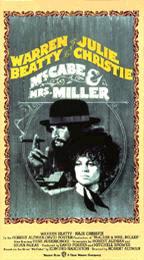
mccabe.jpg

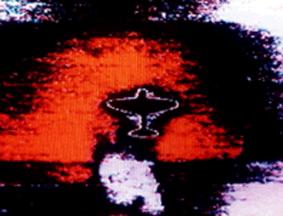
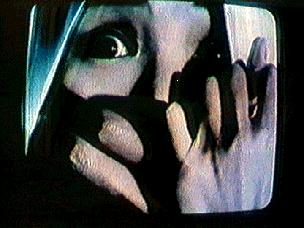
I may, for instance, love "McCabe & Mrs. Miller" and "Sans Soleil" and think that "Star Wars" is a lame excuse for a movie. But "Star Wars" worked for a large audience, and my two faves didn't (although it's a good point that "McCabe" and "Sans Soleil" have worked for important small audiences). And that's worth thinking about.

sans soleil 2.jpg sans soleil 3.jpg
From "Sans Soleil"

Why did "Star Wars" work? What did people respond to there? Because what works is likely to be influential, and to play a big role in the evolution of the art. It may be individual works that have moved me most deeply and made me want to rhapsodize, but attending to the context that they sprouted from has taught me much more, and been much more useful.

I take art to be in part an amplifier and a dramatizer -- of what it's like for us to travel through life, basically. I have a suspicion that amplifying and dramatizing is one of the things consciousness does too.

Wait: art...consciousness...amplifiers both.... Hey, that means that...

Well, for one thing, that I've wandered far off the topic. Care to bring it back?

Best,

Michael

posted by Michael at September 20, 2002


Comments


Post a comment
Name:


Email Address:


URL:


Comments:


Remember your info?